
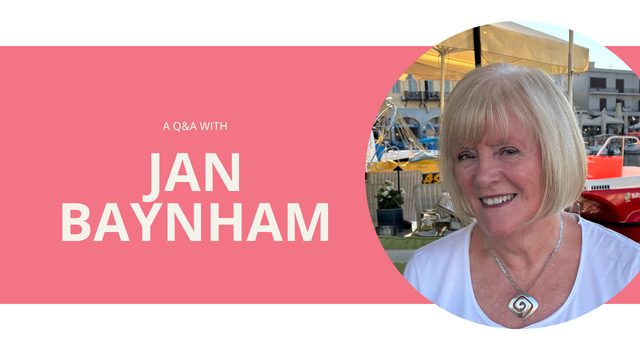
A Q&A WITH JAN BAYNHAM
What inspired you to set the story across two timelines in Crete and Wales?
All my novels have dual timelines. I’m fascinated by how things that happen to someone in one generation can have an effect or an influence on another family member in the next. In The Stolen Sister, what happened to Greta in 1963 was a secret until her daughter, Zoë, goes to Crete to carry out her mother’s final wish. All my novels are partially set in beautiful mid-Wales where I’m from and a contrasting location in sunnier climes. Crete is my favourite Greek island and I wanted Zoë to experience visiting it for the first time as I once did. I was inspired by a true story of a mother who completely closed down after experiencing a tragic event in Greece, not letting her daughter know about her time there.
What drew you to explore lost letters as the thread connecting past and present?
The letters were a way of telling the reader part of Greta’s back story without resorting to the trap of writing an information dump. The reader will learn about some of the love-notes when Greta receives them in 1963 as a declaration of Andreas’s love and more, twenty years later, when Zoë finds them after Greta’s death. They help her understand more about her mother’s time in Crete.
What themes did you most want to explore through this story of love, loss and truth?
As well as those, one of the themes I wanted to explore was one of belonging and identity. It comes as a shock when Zoë finds out the truth. It is important to her that she knows who she really is.
Which scene was the most emotional for you to write?
There are several scenes when I reached for the tissues as I was writing them. For me, however, the most emotional scene was when Zoë does what her mother asked of her, to scatter her ashes off the coast of Crete. Zoë was crying, I was crying and I suspect readers will have a lump in their throats, too.
What do you hope readers feel when the final secrets are revealed?
All my novels end on a happy or hopeful note. After reaching the last page of the book and all becomes clear, I really hope readers will feel satisfied, uplifted and heartened that although my characters have experienced highs and lows, elation and despair, the future is looking good for them.